Blog ·
Winter WFH Self-Care: Desk Comforts for Dry Air, Cold Hands and Long Days
This post contains affiliate links. As an Amazon Associate I earn from qualifying purchases, at no extra cost to you. Learn more.

Winter workdays at home can feel long. The sun sets before you log off, the heating runs all day and it's easy to spend eight hours in the same chair without noticing how stiff, dry and tired you've become. A little self-care at your desk goes a long way.
This isn't about bubble baths in the middle of the afternoon. It's about small, practical comforts built into your workday so you finish feeling a bit more human. Here are the winter WFH self-care habits and desk comforts that make the biggest difference.
Fix the dry air
Indoor heating dries out the air, and many people notice it in their skin, lips, eyes and sinuses by mid-afternoon. Adding some moisture back into the room can make your workspace feel much more comfortable.
A small humidifier near your desk is the easiest fix. The Levoit top-fill humidifier has a 3-liter tank that runs for up to 25 hours, is designed for quiet operation and fills from the top, so it's easy to keep topped up. Clean it regularly according to the instructions, and keep it on a stable surface away from electronics.
A few other ways to fight dry air: keep a hand cream and lip balm on your desk, add a few houseplants and drink more water than you think you need.
Warm up cold hands
Cold hands make typing stiff and slow, and they're one of the most common winter WFH complaints. Fingerless gloves help, but warmth under your hands is even better. A heated desk pad sits under your keyboard and mouse like a regular desk mat and gently warms your hands and wrists while you work.
The tulpock heated desk pad has three heat levels and a four-hour auto shut-off, and when it's switched off it's simply a smooth desk pad.
Keep a warm drink going all day
Staying hydrated is harder in winter, because we don't feel as thirsty. A warm drink solves that and doubles as a mini comfort ritual. Rotate through herbal teas, warm water with lemon and ginger, or decaf in the afternoon. A mug warmer keeps it at a pleasant temperature, so you're not microwaving the same cup three times.
Rest your eyes
Dark winter afternoons mean more time staring at a bright screen in a dim room, which can leave your eyes tired. Try these simple habits:
- Use the 20-20-20 rule. Every 20 minutes, look at something about 20 feet away for 20 seconds.
- Balance your lighting. Turn on a lamp behind or beside your screen so it isn't the brightest thing in the room.
- Lower screen brightness in the late afternoon and switch on your device's warm or night mode.
- Blink. It sounds obvious, but we blink less when concentrating on screens.
Move your body, even a little
Sitting still for hours makes you colder, stiffer and more tired. Build movement into your day with tiny habits rather than big plans:
- Stand up and stretch every time you finish a meeting.
- Walk around the house while you take phone calls.
- Do a few shoulder rolls and neck stretches each time you refill your drink.
- Take a short walk outside at lunch to catch whatever daylight there is.
Chase the daylight
Winter's short days can affect your mood and energy. Make the most of natural light: work near a window if you can, open the curtains first thing and step outside for a few minutes in the late morning or at lunch. When it gets dark, switch to warm, soft lighting to help your body wind down toward evening.
Create small comfort rituals
Rituals give long days a gentle shape. A few ideas:
- Morning: open the curtains, make a warm drink and write your top three tasks.
- Afternoon slump: light a candle, put on a cozy playlist and take a five-minute stretch break.
- Shutdown: tidy your desk, switch off the screen and change out of your work layer into something soft.
These small moments tell your brain that the day has a beginning, middle and end, which matters even more when home and office are the same place.
Stay warm and comfortable
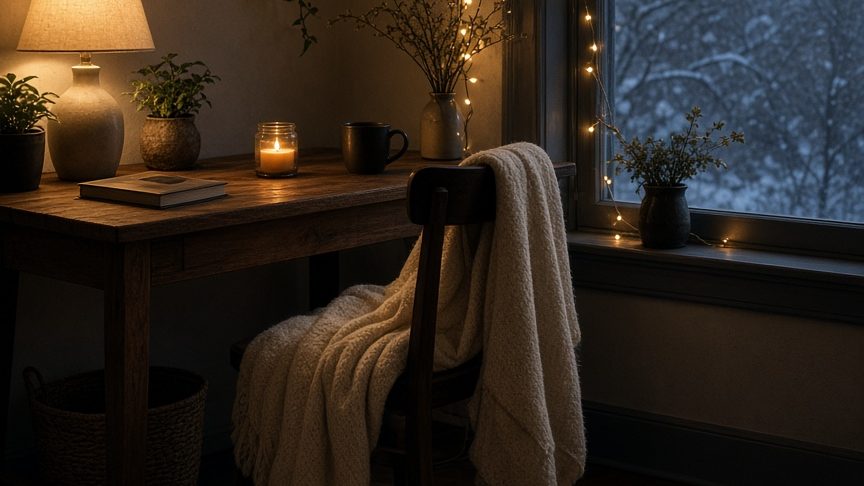
Finally, don't underestimate physical comfort. Thick socks, a soft throw on your chair and a warm rug under your feet all help. For more ideas on beating the chill, read how to stay warm in a cold home office.
Your winter self-care desk kit
- A small humidifier
- Hand cream and lip balm
- A heated desk pad or fingerless gloves
- A big water bottle and a favorite mug
- A warm lamp to balance your screen
- A cozy throw and warm socks
Pick one or two of these to add this week. Winter WFH self-care isn't about doing more. It's about making the hours you already spend at your desk a little softer and kinder.